Böda Sand
Öland's longest beach, with a nature reserve and campsite village
Overview
Öland's beaches from Böda Sand to Grönhögen, fine sand, shallow water and surf spots, plus notes on the swimming season, parking fees and Baltic algae blooms.
Öland is a beach island, and geology is the reason why, its long, narrow shape means a wind-sheltered stretch of coast is almost always within reach. Two very different coastlines meet here: the narrow Kalmarsund strait to the west and the open Baltic Sea to the east, with fine sandy beaches, rocky outcrops, grassy shores and old cold-bath houses (kallbadhus) along the way. The most famous and widest sandy beaches lie in the north, but the south has its quiet corners too. This guide runs through Öland's main beaches and answers the practical questions on water temperature, season and algae.
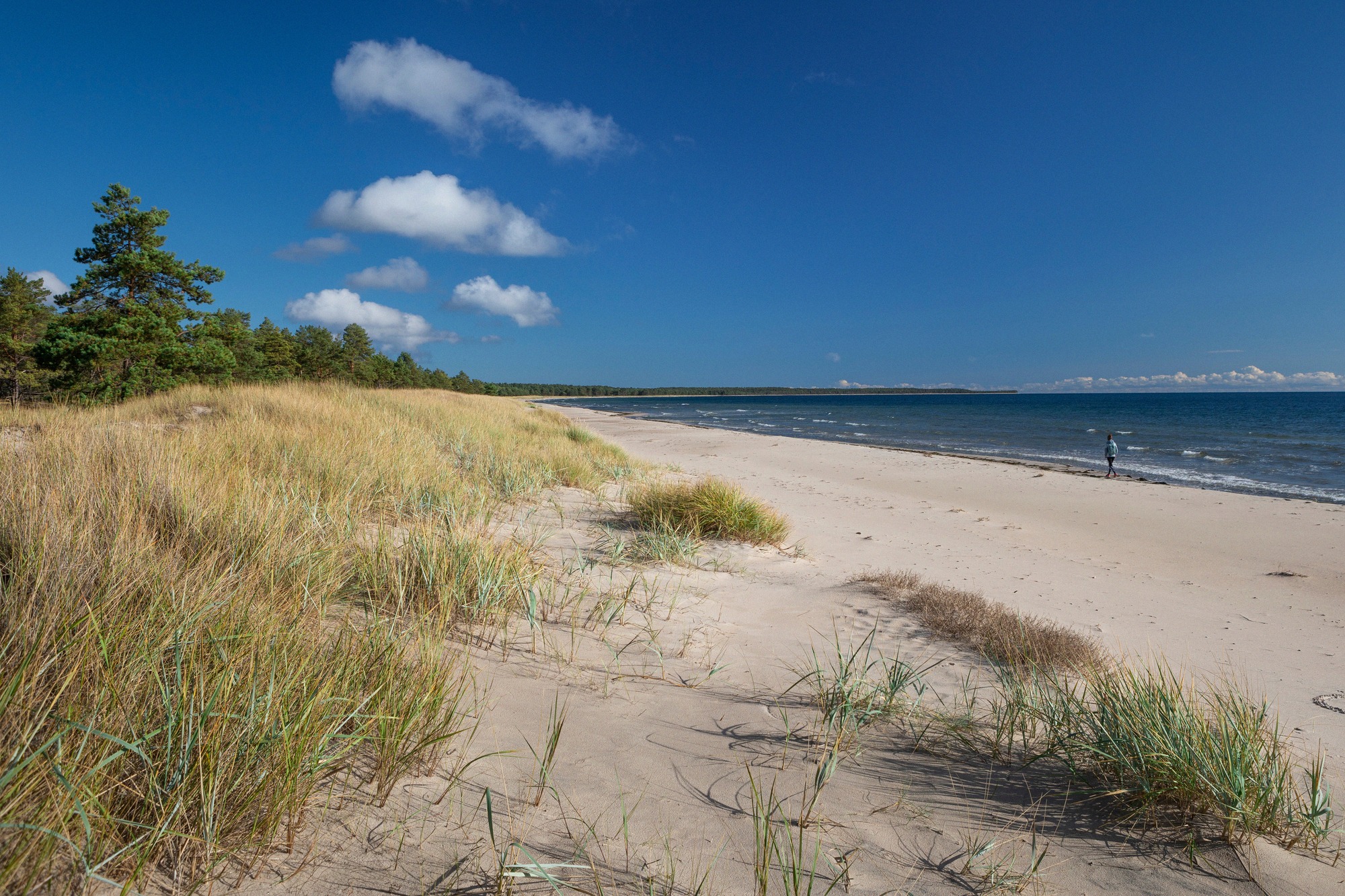
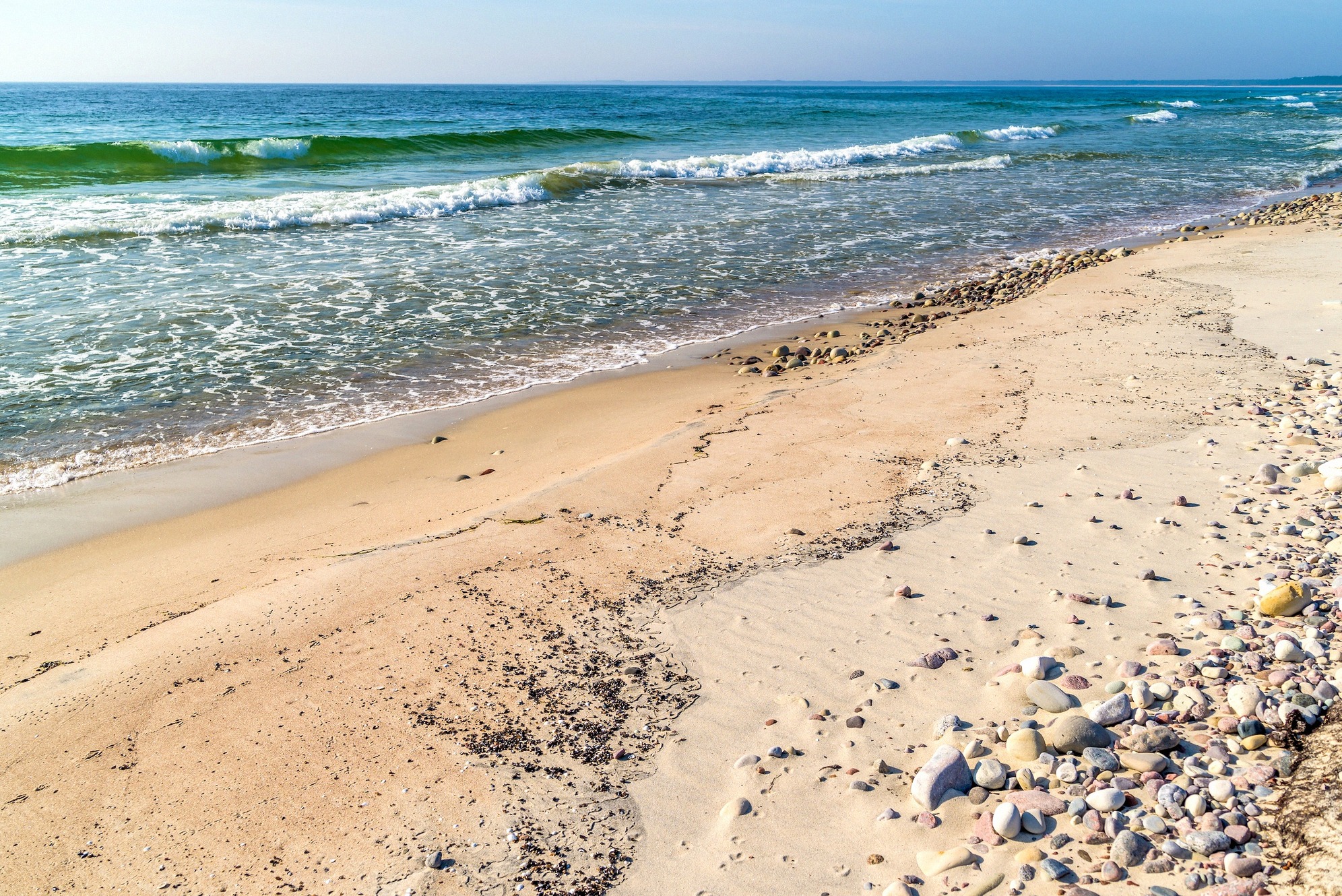
Bödabukten, the bay in the island's north-east, is Öland's classic beach destination. At around 20 kilometres, Böda Sand is Öland's longest beach and ranks among the longest sandy beaches in Sweden. The sand is fine and chalk-white, and the water shelves very gradually (långgrunt in Swedish), both make it an especially child-friendly beach. The bay runs from Böda to Ångjärnsudden; individual named spots along it include Lyckesand, Homrevet and Fagerrör, some with toilets and picnic areas.
Behind the beach lies one of Sweden's largest dune areas. The sand built up over roughly 12,000 years through the action of the Baltic and the wind; the tallest dune, Bölinge backe, stands about ten metres high. The area is protected as a nature reserve (Bödakustens östra); the beach and reserve have free, year-round access, and only the Lyckesand car park charges a fee in high season. More on the beach itself is on the Böda Sand page.
Directly north of Böda Sand, Lyckesand continues the coastline; the two beaches merge into each other within the same nature reserve on the Böda coast. Lyckesand is considered the more natural, quieter option, backed by pine forest and dunes, with less infrastructure than the busy main beach. If you want the same fine sand without the bustle of the campsite, this is the spot.
There's no separate length figure for Lyckesand, it blends seamlessly into Böda Sand as one continuous stretch. More detail is on the Lyckesand page; for an overview of the coast's protected areas, see the Öland Nature guide.
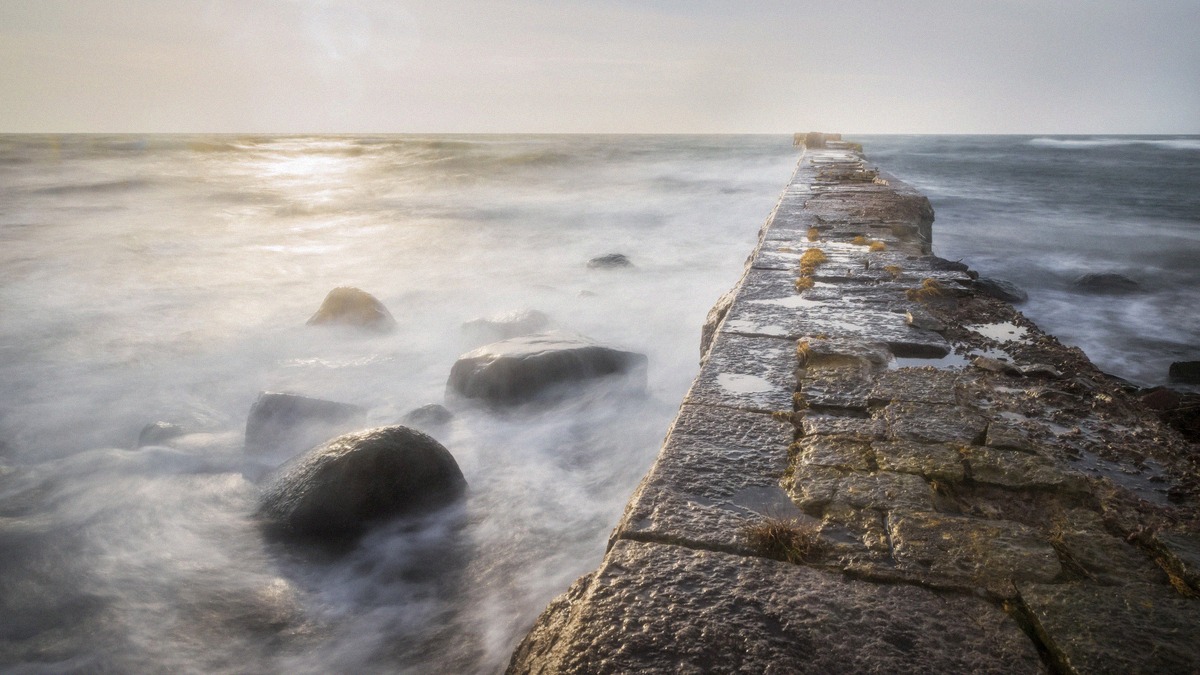
The south is starker and quieter. On the south-west coast, near the island's southern tip, lies Grönhögen, a calm counterpart to the busy north. Instead of a wide sandy beach, a flooded limestone quarry (kalkbrott) is the centrepiece here: a popular swimming spot with clear water right on the coast. The beach and harbour promenade are free and open year-round. The small marina sits right next door.
Right by Grönhögen is also LinksGolf Öland (green fee 800 SEK for 18 holes, 400 SEK for under-18s, including a course guide and cart). More on the village and its history is on the Grönhögen page.
Tides play no role in the Baltic, and the surf is gentle. In summer, the water around Öland averages around 16°C, climbing to around 20°C on individual days in July. That makes July and August the clear best months for swimming, the water is noticeably cooler in early and late summer.
Which coast is warmer depends on the wind. With the south and south-west winds that prevail on Öland, sometimes the Baltic side is more sheltered, sometimes the Kalmarsund side is. That's the practical advantage of the narrow island, if you're exposed to the wind on one side in the morning, you can drive a few kilometres to the other side by afternoon. For how the season unfolds across the year, see the Best Time to Visit Öland guide.
In very warm summers, algae blooms can occur here as they can anywhere in the Baltic. The usual cause is blue-green algae (cyanobacteria), which form mainly from July to August in warm, calm weather and rise to the surface as a visible bloom. Worth knowing, roughly half of these blooms can be toxic. If you see a visible algae film, the rule is simple: don't swim, and keep children and dogs away.
Öland's beaches are regularly tested for bacteria and algae by the local municipality. Current water quality and algae reports are available before your beach day from the Swedish Agency for Marine and Water Management (Havs- och vattenmyndigheten) and the Kalmar County Administrative Board (Länsstyrelsen Kalmar). If a bloom does appear, moving to the wind-exposed side of the island, where the water keeps moving, often helps.
For more than just swimming, Öland has good conditions for windsurfers and kitesurfers. Haga Park near Färjestaden, on the Kalmarsund side, is considered one of Sweden's best-known spots, with reliable wind especially in spring and autumn, and shallow water that's warm in summer. A surf centre on site rents windsurfing and SUP gear and runs courses. Other spots include Köpingsvik, Sandbergen and Kleva.
At the family-friendly end of the spectrum is Kronocamping Böda Sand: the site behind the beach is one of Sweden's largest campsites (around 1,350 pitches and 125 cabins) and brings a whole infrastructure with it - restaurants including the Böda Beach Club and Krabban, a bakery, an ICA supermarket, a pool and spa, adventure golf, tennis, beach volleyball, and hire for SUPs, pedal boats and RIB tours. The beach itself is only around 20 metres away and is cleaned daily.
By car, you reach Öland via the toll-free Öland Bridge (6,072 metres, opened in 1972) from Kalmar to Färjestaden; it's open to motor vehicles only. Buses from Kalmar also cross the bridge, and Kalmar itself is reachable by train (SJ and Krösatåg) from Stockholm, Gothenburg, Malmö, Copenhagen or Växjö - Copenhagen is the most useful starting point if you're arriving from abroad, with its international airport and rail links into southern Sweden. Year-round, direct coaches also run twice daily between Stockholm City Terminal and Öland, with stops as far as Böda in the north.
In summer, a seasonal car ferry also runs from Oskarshamn to Byxelkrok in Öland's north (crossing takes around two hours), a handy way to head straight for the quiet north and its beaches, or to combine Öland with Gotland, since the Gotland ferry to Visby (around three hours) also departs from Oskarshamn. Full details on all connections are in the Getting There guide and the Ferries to Öland guide.