Gettlinge Burial Ground
Stone ship setting & windmill in southern Öland
One of Öland's largest burial grounds, over 300 graves, a 30-metre stone ship setting and a post mill on the escarpment above the Kalmar Sound.
Contents
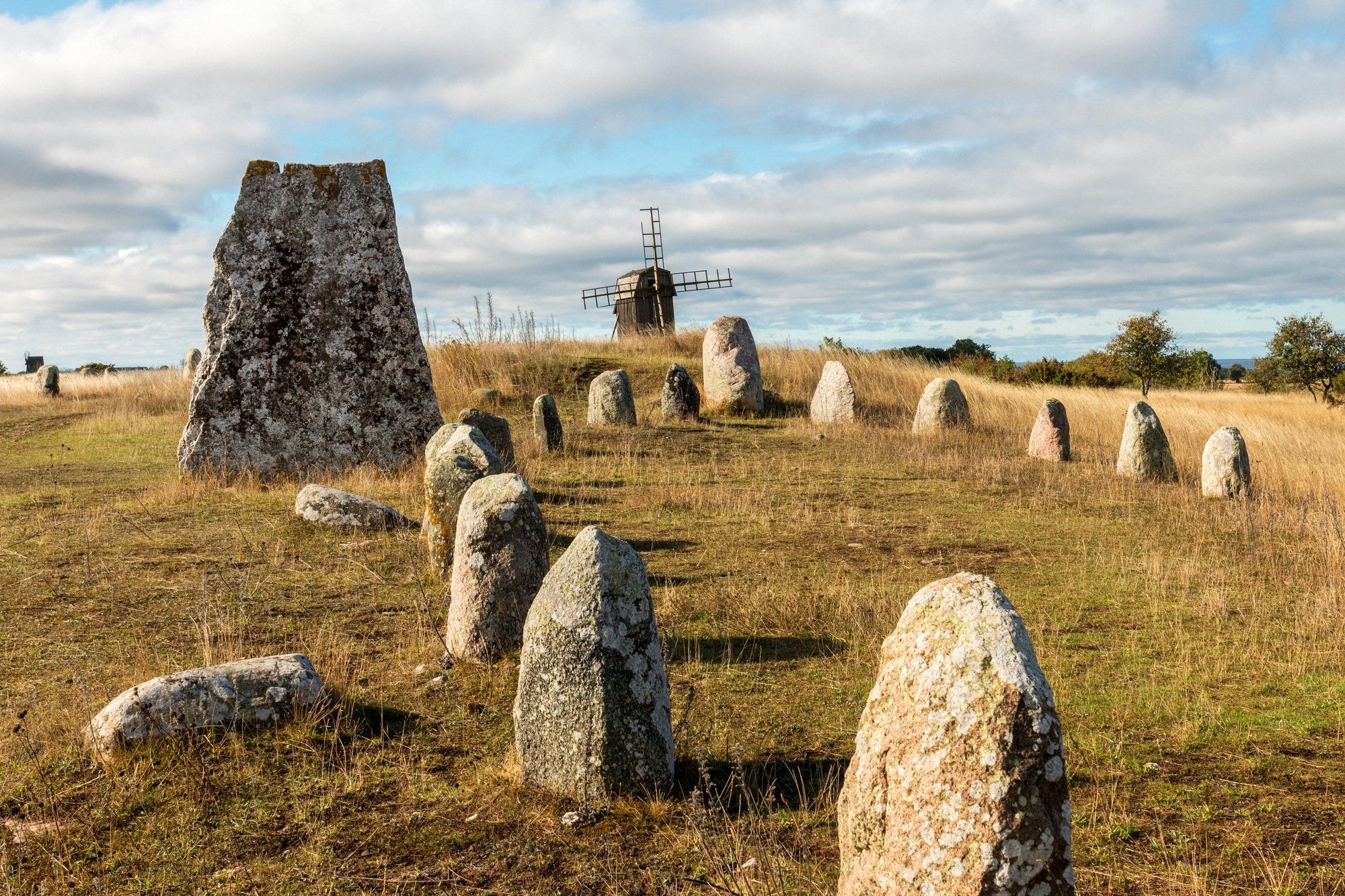
Gettlinge Burial Ground stretches almost two kilometres along the Väg 136 across Öland's western escarpment, one of the largest and best-preserved prehistoric burial grounds on the island. Over 300 graves, a striking stone ship setting and a windmill stand here with wide views across the Kalmar Sound.
What to expect
The burial ground extends between the villages of Klinta, Gettlinge and Gårdstorp in Mörbylånga municipality, in the south of the island near Degerhamn. The main part lies west of the road on the escarpment; a few graves also sit east of it on the open alvar (Öland's limestone plain).
Over 300 grave monuments spanning roughly 2,000 years stand closely together here, in a wide range of forms:
- Stone ship settings, the largest around 30 metres long, made from 23 upright granite blocks, with about 20 carved cup marks.
- Stone circles (domarringar, "judges' rings"), burial mounds and stone cists.
- Standing stones and edge-set limestone slabs.
In the middle of the burial ground stands a post mill (stubbkvarn). Gettlinge is the only place in Sweden where you can see a windmill and a stone ship setting together, a combination that's part of what makes the site so appealing. Whether the mill's interior can be entered is not officially documented.
Roughly 2,000 years of burial history
The site was used over roughly two millennia, from the late Bronze Age (around 1000 BC) through the Iron Age and into the early Christian period (around AD 1050). Finds from the Roman Iron Age (around AD 1 to 400) point to the status of those buried here: spurs, spearheads and a shield boss have been uncovered.
Around 1900, 15 graves were excavated, all men's graves, many already looted. Grave goods included spears, shields, spurs and even a dog. The site has occupied scholars for centuries: Rhezelius drew the stone ship setting as early as 1634, Carl Linnaeus opened a grave in 1741, and Abraham Ahlqvist described the site in 1825. Today the Swedish National Property Board (SFV) manages the site, having taken over responsibility from the National Heritage Board in 2015.
Visiting & practical info
- Getting there & parking: Gettlinge lies in southern Öland on the Väg 136 near Degerhamn, well south of Borgholm. There's a car park with an information board at the burial ground.
- Admission: free and accessible year-round, with no fixed opening hours. Visits are self-guided.
- Duration: 30 to 60 minutes is enough for the stone ship setting, the mill and a walk across the site.
- Best time: in May and June, the rare spring pheasant's eye (våradonis), a steppe plant, flowers here. Evening light over the Kalmar Sound is also worth the stop. See our overview of the best time to visit for seasonal notes.
- Note: the terrain is open alvar along the escarpment; no official accessibility information is available. The information boards are in Swedish.
Nearby
Gettlinge sits conveniently on the way south and combines well with the major sights at the island's southern tip: the reconstructed ring fort Eketorp, the bird reserve Ottenby and the Långe Jan lighthouse. For more on the island's mills, see our guide to Öland's windmills. The bare steppe landscape around Gettlinge is part of the Stora Alvaret World Heritage Site.
Frequently asked questions
Is there an admission charge for Gettlinge Burial Ground? +
How long should I plan for a visit to Gettlinge? +
When is the best time to visit? +
What makes Gettlinge special? +
Nearby
Eketorp Fortress
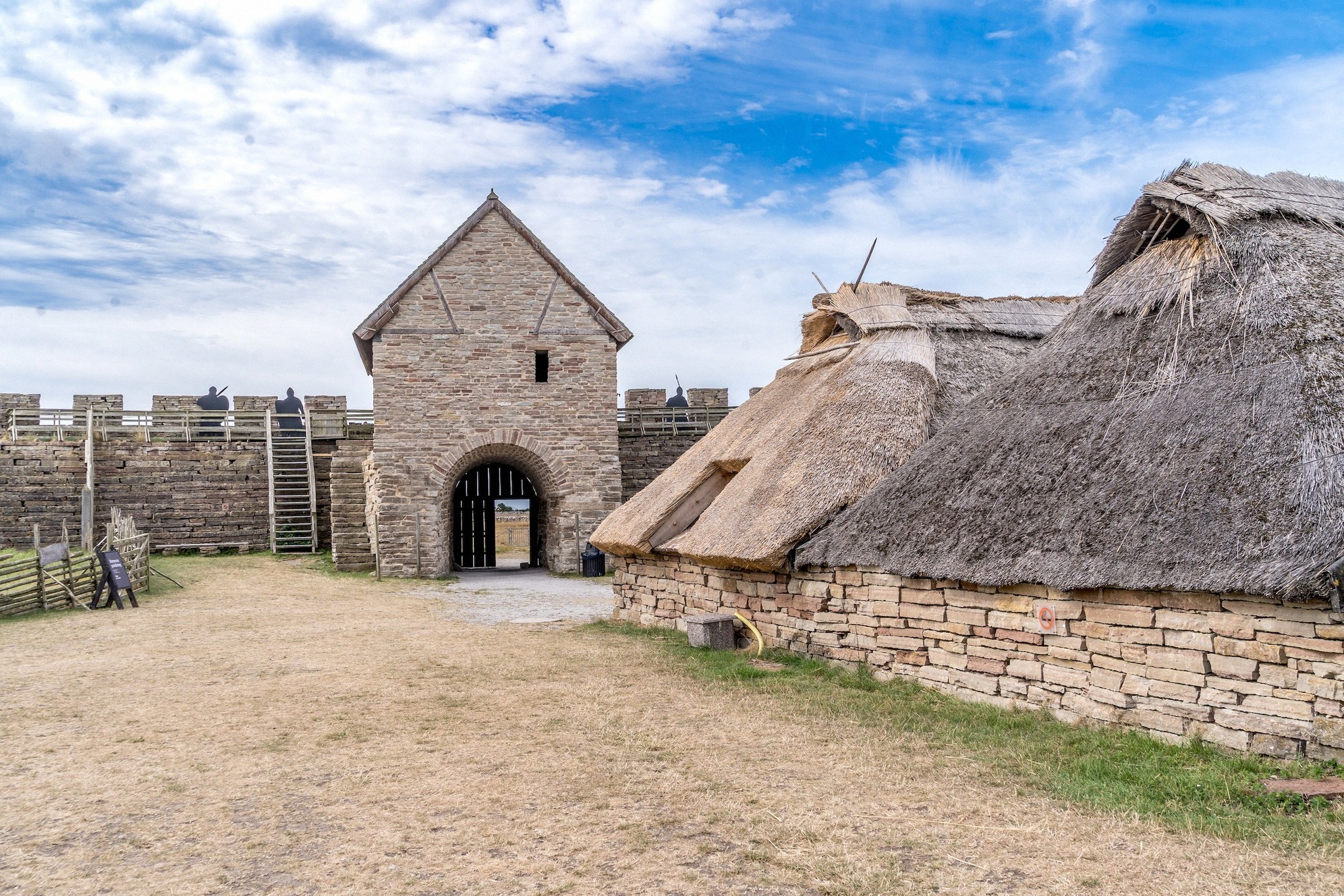
Eketorp Fortress in southern Öland is a partially reconstructed Iron Age and medieval ring fort, now an open-air museum with heritage farm animals, crafts and guided tours.
Grönhögen
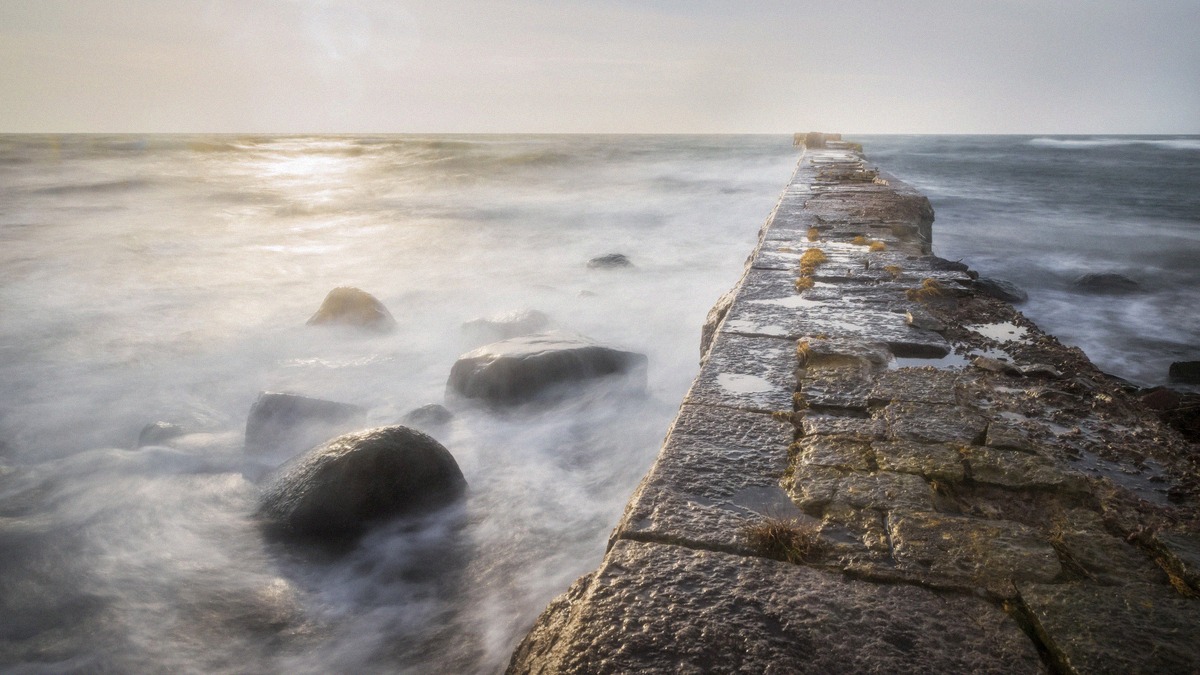
Quiet seaside village on Öland's south-west coast, swimming in an old limestone quarry, a guest harbour with around 20 berths and a links golf course, a few kilometres from Ottenby and Långe Jan.
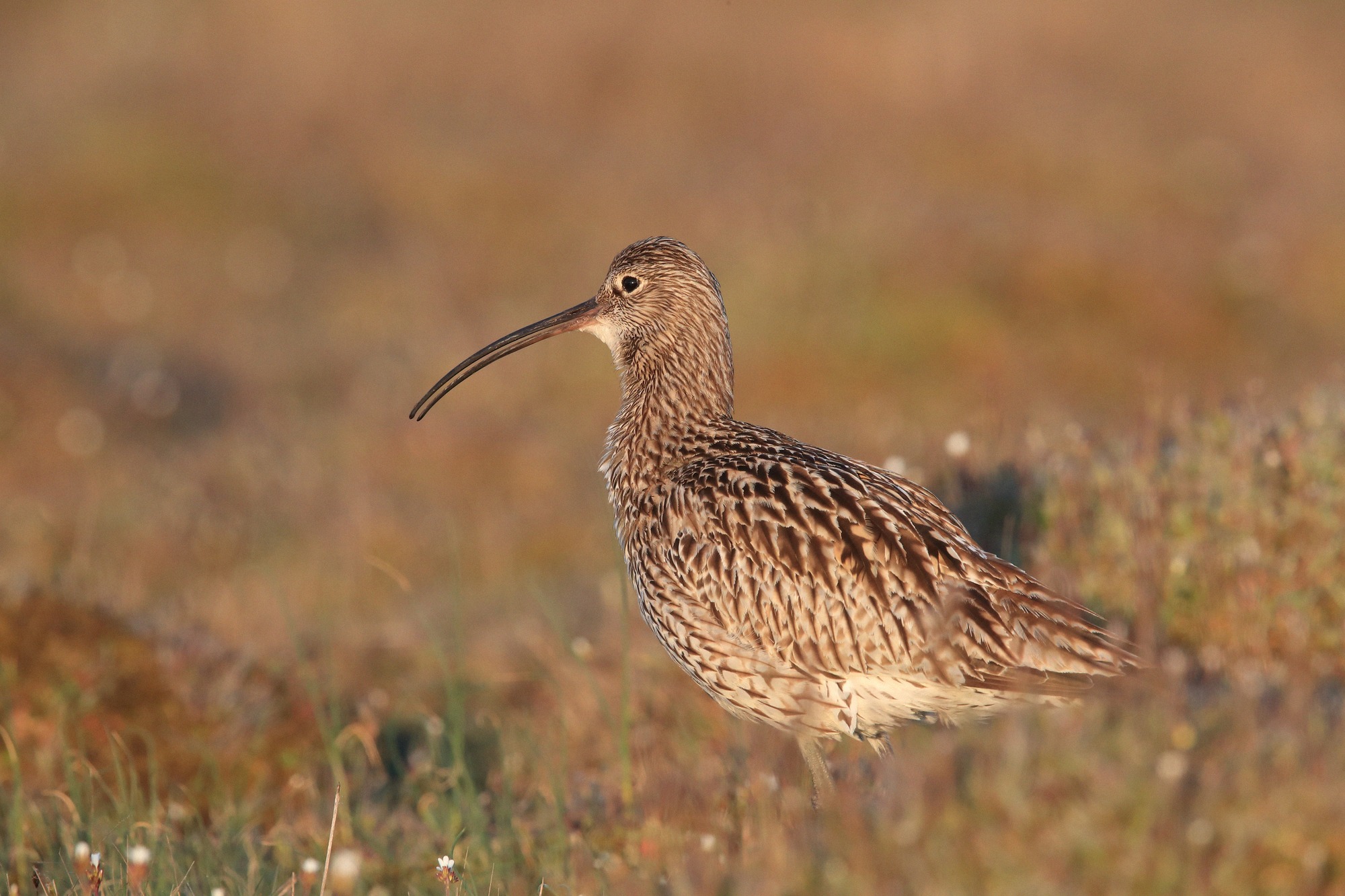
Ottenby
Nature reserve and bird observatory at Öland's southern tip, one of Sweden's best birdwatching sites, with a Naturum visitor centre, viewing towers and the King's Wall.
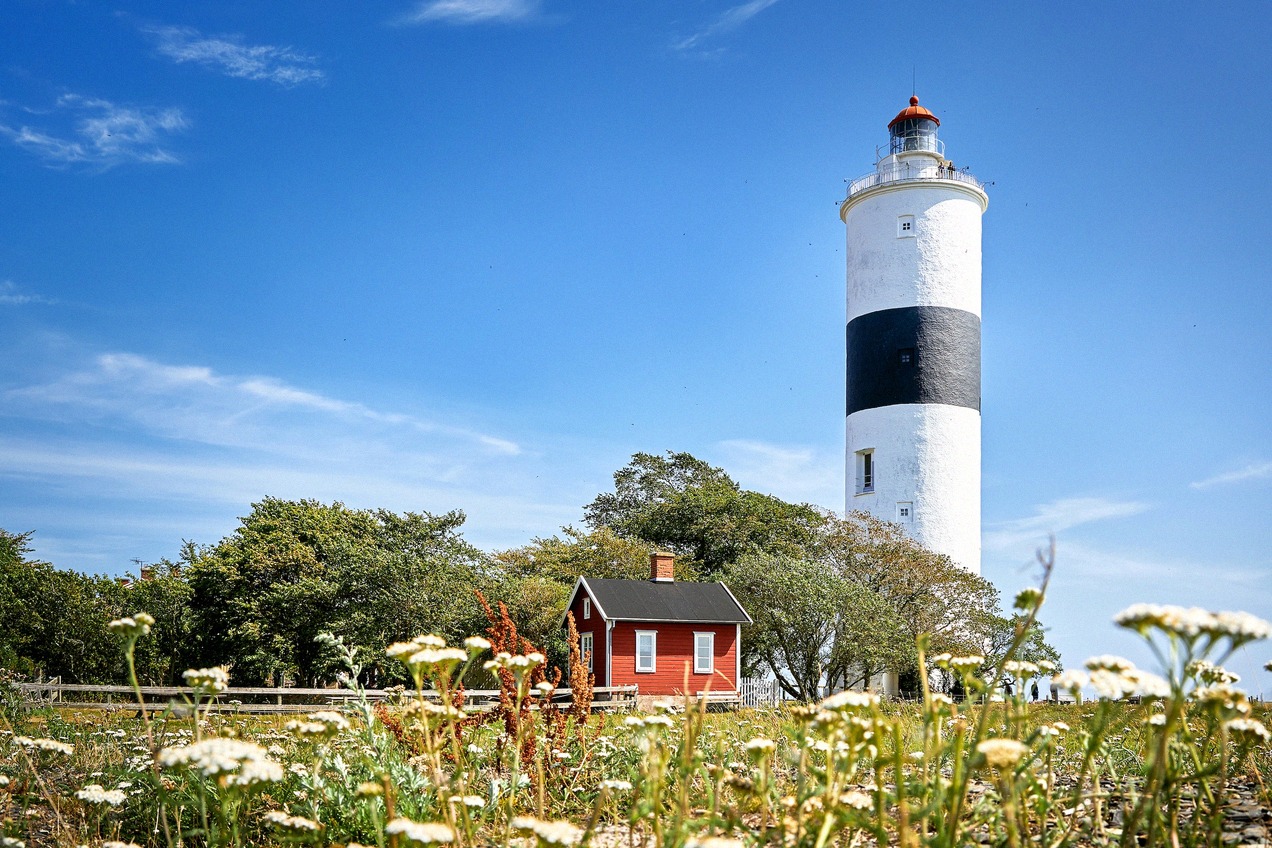
Långe Jan
At 42 metres, Sweden's tallest lighthouse stands on Öland's southern tip. 197 steps lead to a platform overlooking the Baltic and the Ottenby bird reserve.
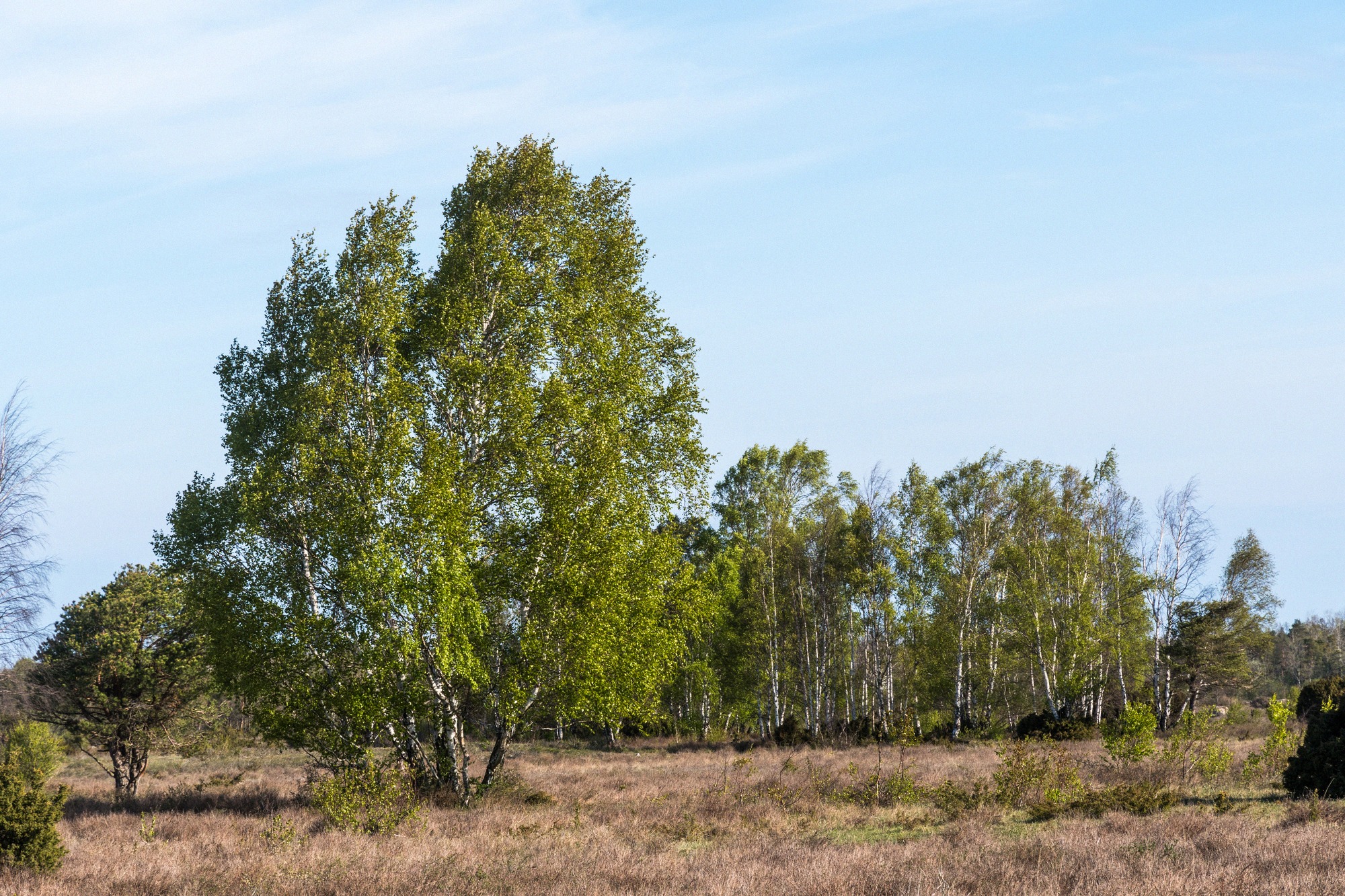
Stora Alvaret
The treeless limestone steppe in southern Öland, around 260 km² and a UNESCO World Heritage site. Over 35 orchid species, rare endemics and one of the island's best birding areas.