Öland with Kids
Zoo, gently shelving beaches and a walk-in Iron Age fort, the best family days out on Öland in 2026, with prices, opening hours and rainy-day tips.
Contents
Öland is a rewarding destination for families, distances are short, the beaches shelve gently, and the island packs a zoo with funfair rides, a walk-in Iron Age fort and miles of sandy beaches into a small area. This guide runs through the key outings for children, with up-to-date 2026 prices and opening hours, and answers the practical questions around getting there, where to stay and what to do on rainy days.
Ölands Djurpark, zoo, rides and water park in a day
The island's biggest family destination is Ölands Djur- och Nöjespark near Färjestaden (Djurparksvägen 1), a zoo, funfair and water park rolled into one. Plan on a full day for a visit. In the high season, from 13 June to 16 August 2026, the whole park is open, the zoo from 10:00 to 18:00, and the funfair (Nöjesfält) and water park from 11:00 to 17:00.
Admission covers every attraction in high season and costs 495 SEK per person; a 2-day ticket is available for 695 SEK per person. Children under one metre tall go free. In the low season, selected days in May, June and August, only the zoo is open, at 195 SEK per person. Parking costs 60 SEK a day. Payment is on-site; there's no need to book ahead.
The funfair has 19 rides for all ages, included in admission, plus classics like a fishing pond, ball toss and wheel of fortune. A few rides have height restrictions for safety reasons, so not every ride suits the very youngest visitors. More detail in our full guide to Ölands Djurpark.
Böda Sand, the beach for young children
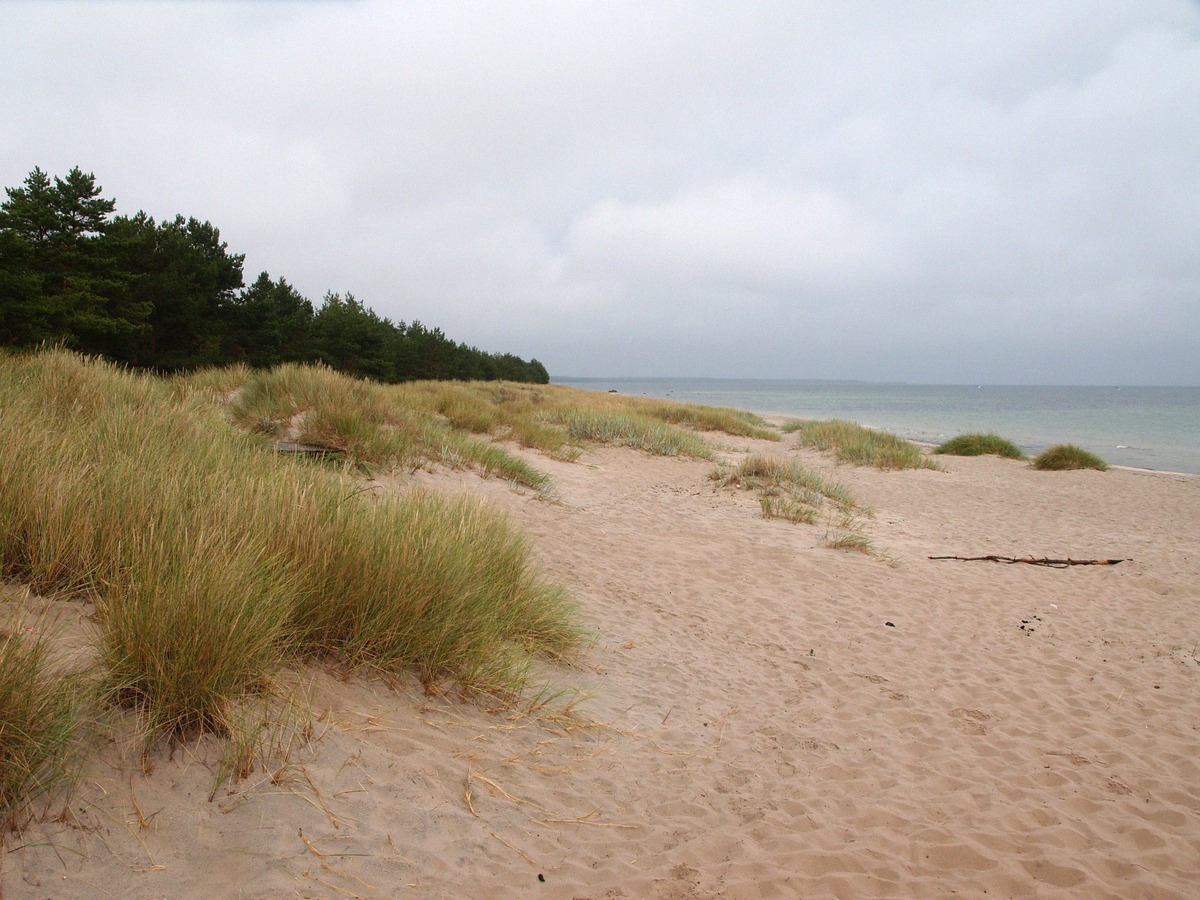
Öland's most family-friendly beach is Böda Sand in the north of the island, a mile-long stretch of chalk-white sand with very gently shelving water. That means the seabed drops away slowly and shallowly, so children can still stand even some way out from shore. The sand is cleaned every morning. Exact water depths can't be pinned down in metres, but the gentle slope makes Böda Sand one of the safer swimming spots for young children.
The infrastructure is built for families, toilets, showers, a kiosk, restaurants, a café, playgrounds, minigolf, a spa with sauna, and even a swimming school. The site also has a water park with a 25-metre pool, a shaded children's pool, a toddlers' pool and water slides; in 2026 it runs from around 18 June to 23 August. Guests staying at the campsite can hire pedal boats.
A comfortable sea temperature is generally reckoned at 19 to 22°C. In southern Sweden, the sea typically reaches around 20 to 22°C in July and August - Öland and Gotland get more sunshine hours than anywhere else in Sweden, but the water is still the Baltic and can feel cooler on off days. Day-to-day figures for Böda Sand specifically can't be reliably predicted. More swimming spots are rounded up in our overview of Öland's beaches.
Eketorp - Iron Age life, hands-on
The reconstructed ring fort Eketorp in the south lets children do more than just look at the Iron Age, they get to experience it. In summer there's archery, bread baking and traditional crafts, and at the Barnens museum (children's museum) kids learn about the Iron Age and can try on period clothing. That makes Eketorp one of the few sights where history genuinely comes alive for younger children.
Admission is inexpensive and covers all activities, exhibitions and events, adults pay 75 SEK, children aged 7 to 19 pay 50 SEK, under-7s go free; students and seniors 65+ pay 65 SEK, and dogs go free. In high season, from 20 June to 16 August 2026, the fort is open daily from 10:00 to 17:00. Outside those dates opening hours are limited, from 1 to 18 June and 19 to 30 August, it's open Wednesday to Sunday only. Eketorp is closed on Midsummer's Eve, 19 June, and open only from 10:00 to 14:00 on 22 June.
Worth knowing for spontaneous visits, the fort grounds themselves are accessible year-round, but outside the season there's no staff, exhibition or activities. The full experience is really only on offer during the staffed summer weeks. More at Eketorp Fortress.
Trollskogen, a short magic forest for small explorers
At the island's northern tip lies the nature reserve Trollskogen, a wind-sculpted pine forest that makes a good family walk. Several colour-coded trails are on offer, roughly between 1 and 4.5 kilometres, including a gravelled loop of around 1 kilometre, a middle loop of about 2.7 kilometres, and the main trail of roughly 4.5 kilometres with information boards. Actual walking times depend on the pace with children in tow; the short gravelled loop is manageable even with tired legs.
A highlight for children sits on the east coast, the wreck of the three-masted schooner Swiks has lain in the sand there since 1926, when it ran aground, and is still visible today. There are also Iron Age burial mounds and fortifications nearby, so the forest quietly tells a bit of history along the way.
At the entrance is Naturum Trollskogen, with indoor and outdoor exhibitions on the Baltic Sea, pine forest, fossils and insects, plus guided tours and activities for children and adults. That makes Trollskogen a solid rainy-day option too. More at Trollskogen.
Getting there and getting around with children
By car, Öland is reached via the 6.1-kilometre Öland Bridge (Ölandsbron) from Kalmar; the bridge is toll-free. From Stockholm it's roughly 5 to 6 hours' drive, and from Gothenburg about 4.5 hours, worth building in plenty of stops with children along the way. Travelling by train, Stockholm to Kalmar Central takes around 4 to 4.75 hours, usually changing at Alvesta, followed by a bus over the bridge onto the island. More in our guide to getting to Öland.
On the island itself, the bicycle is a good family option, since Öland is flat. There are several hire points, including in Borgholm, Färjestaden, Byxelkrok and Böda Sand; Ölands Cykeluthyrning keeps around 200 bikes on hand, including children's bikes in three sizes and child trailers rated up to 35 kg. A gentle, flat route for beginners is the roughly 10-kilometre family ride from Borgholm to Köpingsvik along the coast road. More in our guide to cycling on Öland.
Where to stay, when to go, and rainy days
Cottages (stugor) are the common choice for families, available for 2 to 8 people, with family cottages for 4 to 6 people, complete with kitchen and bathroom, running roughly 1,500 to 2,000 SEK a night in high season, often with a 10 to 15 percent discount for a full week. In high season, from around late June to early August, many places only rent by the week (Saturday to Saturday). Family-friendly campsites include First Camp Löttorp, First Camp Ekerum and Böda Sand, with free kids' activities and a mini disco. A total budget for a family week can't be pinned down reliably, but the individual costs, accommodation and admission fees, are easy enough to calculate, and at least the bridge is toll-free. More in our guide to holiday homes on Öland.
The best time for families is May to September, with pleasantly warm weather; the real high season is the Swedish school summer holiday (sommarlov), running from around mid-June to mid-August (term ends around 12 June 2026, followed by roughly ten weeks off). July's average temperatures sit around 18 to 22°C. A fuller breakdown is in our guide to the best time to visit Öland.
For rainy days, there are decent indoor options, the indoor pool with spa and heated outdoor pool at Hotel Skansen in Färjestaden, the water park at Böda Sand, libraries in Färjestaden, Mörbylånga and Borgholm, cinemas in Mörbylånga, Borgholm and Löttorp, and the exhibitions at Naturum Trollskogen. Even so, sun cream and a windproof jacket are worth packing even in high summer.