Renting a Holiday Home on Öland - Agencies, Prices & Regions
Renting a stuga on Öland, which agencies to use, what a summer week costs in 2026, how early to book and which region suits which traveller.
Contents
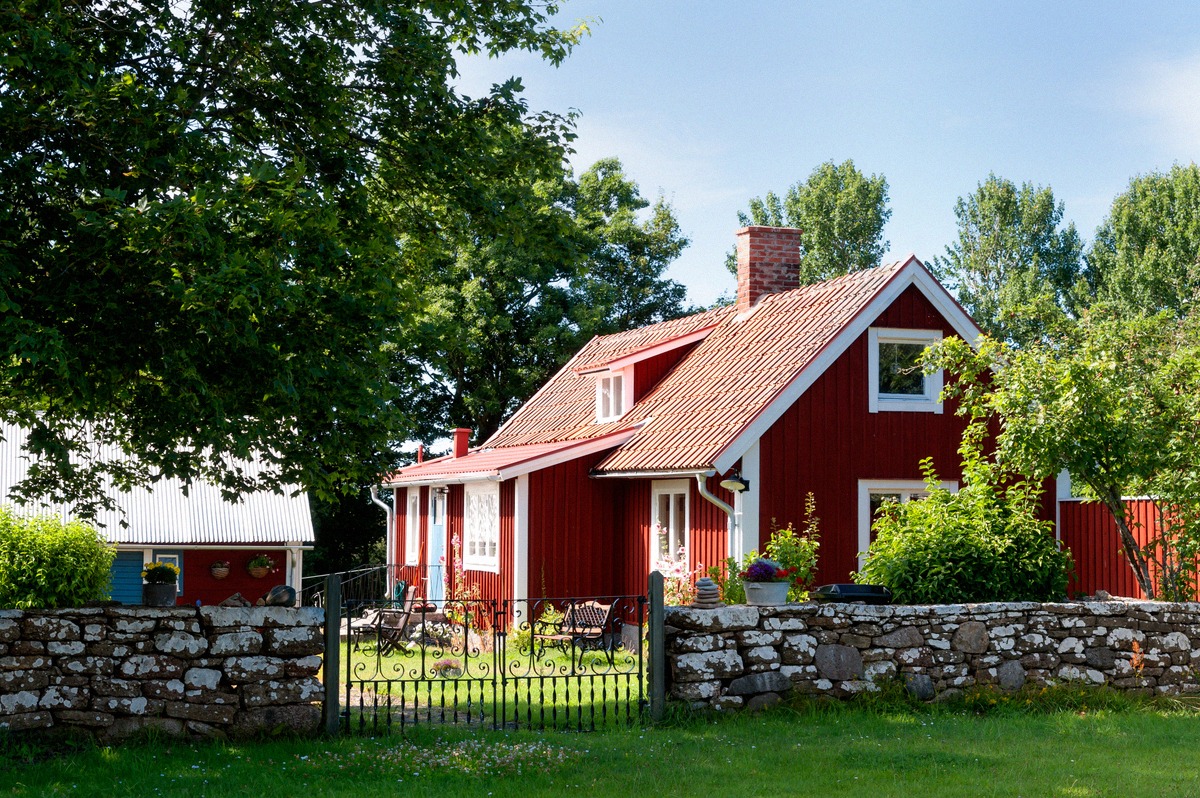
A holiday home - Swedish stuga, is for many the most natural way to experience Öland: your own pace, a kitchen for self-catering, nature right outside the door and space for the whole family. Book the right house at the right time and you'll stay cheaper and quieter than in a hotel. This guide covers where to book, what a week costs in summer 2026, how far ahead to plan and which region of the island suits which type of trip.
Where to book a stuga
The largest organised agency on the island is NOVASOL, with its own local staff; the company explicitly advertises flexible arrival dates rather than rigid weekly changeovers. Alongside it, listing portals dominate, where private and commercial owners advertise their houses, the main ones are Stugknuten, Stugnet, Stugbasen and Fritiden, plus the big international platforms.
One change is worth keeping in mind when comparing: at the turn of 2025/2026, the former portal Atraveo was fully merged into HomeToGo. Anyone who booked through Atraveo before now finds the same houses under the HomeToGo brand. There's no reliable figure for Airbnb's market share on Öland, the platform is present, but no exact number exists.
In practice, this means it's worth searching for the house you want on more than one portal, since owners often list on several channels and prices, extra fees and availability can differ between them.
What a week costs
As a rough guide, expect €500 to €1,200 for a summer week; small, simple houses in the low season can start from around €200 a week. NOVASOL's tiers for seven nights run from about €270-320 (basic) through €430-530 (mid-range) and €700-900 (upmarket) up to over €1,700 for luxury properties.
Concrete examples from the Borgholm area put the range into perspective: a stuga in the town centre costs around SEK 12,900 a week in high season (weeks 25 to 33), and SEK 8,900 in low season; a flat in southern Borgholm runs at SEK 13,500 in high season versus SEK 10,500 outside it. At a rate of roughly €9.20 per SEK 100, that works out to about €820 to €1,240 a week. Campsites sometimes charge by the night instead, at Kapelludden, for example, stugor cost SEK 1,000 to 3,000 a night in summer, or roughly €92 to €276.
Keep an eye on the extra costs, or the total won't add up:
- Bed linen and towels are usually not automatically included, but cost an extra fee, typically around SEK 60 to 100 per bed or per person and change.
- End-of-stay cleaning is often billed separately, some agencies let you choose between cleaning it yourself or paying a cleaning fee.
- Wi-Fi is widespread (around 68 per cent of properties in market data) but not guaranteed; if you need to work or stream, get it confirmed before booking.
When booking, ask specifically about bed linen, towels, cleaning and internet rather than assuming they're included.
When you need to book
Öland is in high demand in midsummer, and the best houses go fast. Agencies recommend a lead time of 6 to 9 months for July and August, and more like 9 to 12 months for Midsummer and Christmas/New Year. The most sought-after stugor, especially beachfront ones in the north, are often fully booked the previous year, several houses for summer 2026 were already taken at the time of research.
Being flexible makes things easier. In the low season from April to May and September to October, availability is relaxed, and last-minute bookings are sometimes possible. The changeover day is also less rigid than it used to be: Saturday remains the most common arrival day, but many properties allow other days and times. If you're after a long weekend, search specifically for houses with free choice of day.
North region - Böda and Byxelkrok for beach holidays
The north has the highest density of holiday homes, and it's also home to the most popular beaches. Bödabukten stretches for nearly 20 kilometres of sandy beach along the north-east coast, often called "Öland's Riviera" and one of Sweden's best-known beaches. It takes in the bathing spots of Fageröer, Homrevet, Lyckesand and Böda Sand; the bay is shallow, making it especially family-friendly. Böda Sand has held an "excellent" EU bathing water rating for four years running, and Lyckesand is another classic spot in the bay.
At the very northern tip near Byxelkrok there's an EU bathing spot with a mix of rock and sand and a bathing jetty. In Grankullavik you'll find stugor with sea views, a private sandy beach, two bathing jetties and two bathing platforms, within walking distance of both Böda and Byxelkrok. The north is therefore the top choice for anyone who wants to combine a stuga with beach life, and it's booked out early accordingly. For more options, see the overview of Öland's beaches.
Borgholm region, central living with everything on foot
If you don't want to drive every day, base yourself around Borgholm, Öland's largest town. Centrally located stugor and flats are marketed specifically on the fact that the harbour, shops, restaurants and beaches are all within walking distance. From the guest harbour, the centre is a short walk away; the Borgholm Castle ruin and the royal residence Solliden Palace are each roughly a 15-minute walk.
That makes Borgholm a practical base for anyone who values a lively town, easy amenities and short distances, and who wants the option of leaving the car parked. The central example prices above come from exactly this segment, central here doesn't automatically mean pricier than the beach, just more convenient. Read more in the Borgholm guide.
South region - World Heritage, wide open space and quiet houses
If you're after peace, landscape and culture, head south. Southern Öland has been a UNESCO World Heritage Site since 2000, from the 260-square-kilometre Stora Alvaret to the southern tip at Ottenby with its bird reserve. Key towns are Mörbylånga, the main town of the south, and Degerhamn, alongside the well-preserved medieval row villages of the cultural landscape.
Getting to the south is notably quick: you reach the island via the roughly 6-kilometre, toll-free Öland Bridge (Ölandsbron) from the mainland at Kalmar, and Kalmar Öland Airport is just a few minutes from the bridge. Inland and in the south you'll find the more secluded houses, less beach bustle, but wide-open landscapes, World Heritage scenery and starry skies. Travelling with a dog also means plenty of space in the south; see the Öland with dogs guide for details.
Who a stuga suits, and who it doesn't
A holiday home plays to its strengths for families, self-caterers and couples staying longer. The shallow, family-friendly bays in the north, self-catering with a proper kitchen, and weekly rentals suit travellers staying at least a week. For families with children, a stuga near the beach is often the most relaxed option, more ideas in the Öland with kids guide.
A classic holiday home suits short trips, single weekends and budget-conscious solo travellers less well: weekly prices, plus often separate charges for bed linen and cleaning, make the per-night cost poor value for one person. If you're only staying a night or two, or travelling alone, other types of accommodation are usually a better fit, it's worth looking at camping on Öland, the hotels, or the overview of where to stay on Öland. For which season suits you best, see the guide to the best time to visit Öland: July is high season with the highest prices, June and August are quieter and a little cheaper, and the low season runs around 30 per cent below peak summer.