Overview
Trip Planning for Öland
How to plan your Öland trip: highlights from north to south, what's free, what costs admission, and how much time to allow.
Contents
Öland is easy to take in as a single trip: one main road runs about 137 kilometres from the northern tip to the southern tip, and almost every highlight sits close to that road. Whichever way you're arriving on the island, it's worth planning in day-by-day stages from north to south
- and deciding in advance what's genuinely worth the detour and where you'll need to pay admission.
Getting there, with or without a car
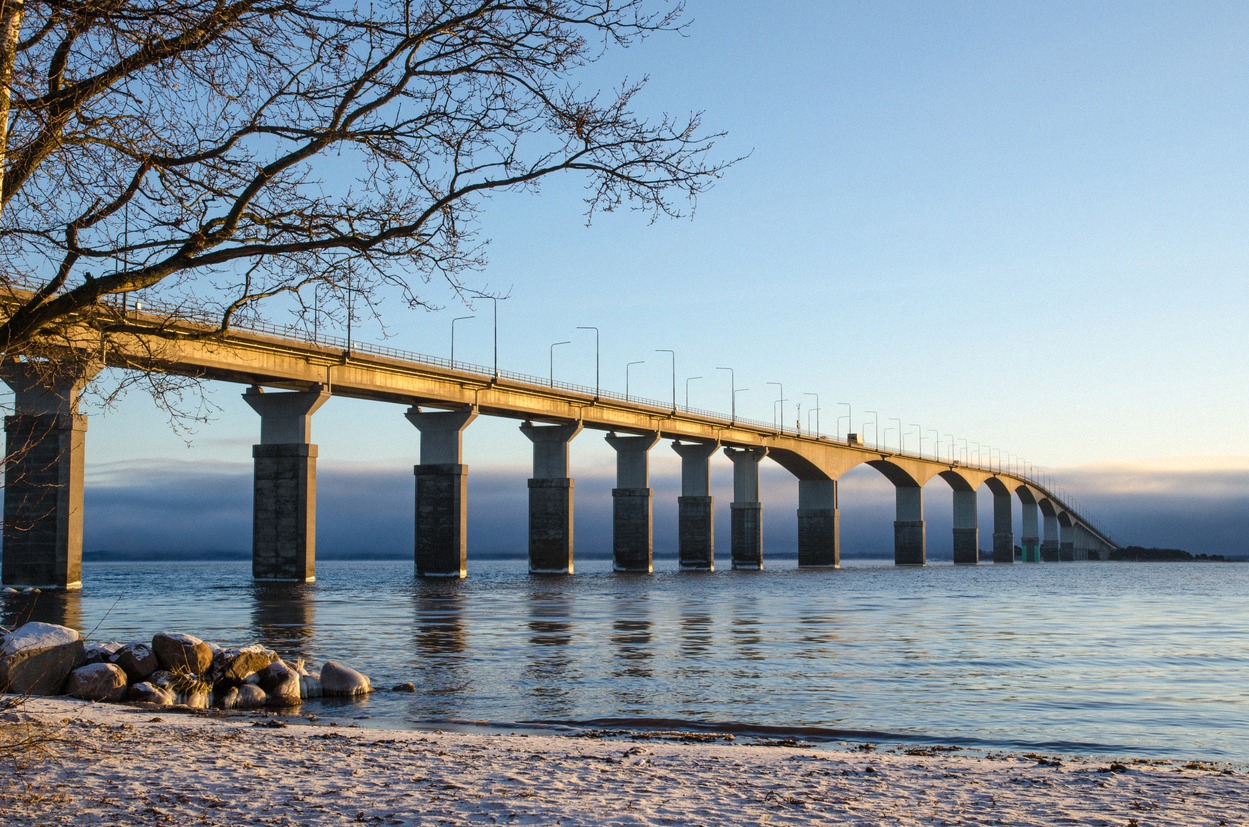
The island is reached via the roughly six-kilometre, toll-free Öland Bridge (Ölandsbron) from Kalmar; there is no ferry between Kalmar and Färjestaden, despite what you might expect. Öland also works well without a car of your own: the island has no railway, but the mainland station Kalmar Resecentrum is well connected, and from there bus line 105 crosses the bridge to Färjestaden in around 22 minutes, roughly every 30 minutes. In summer, the small car ferry Ölandsfärjan also runs from Oskarshamn to Byxelkrok at the northern tip. For more detail, see the guides Getting to Öland and Ferries to Öland.
The highlights from north to south
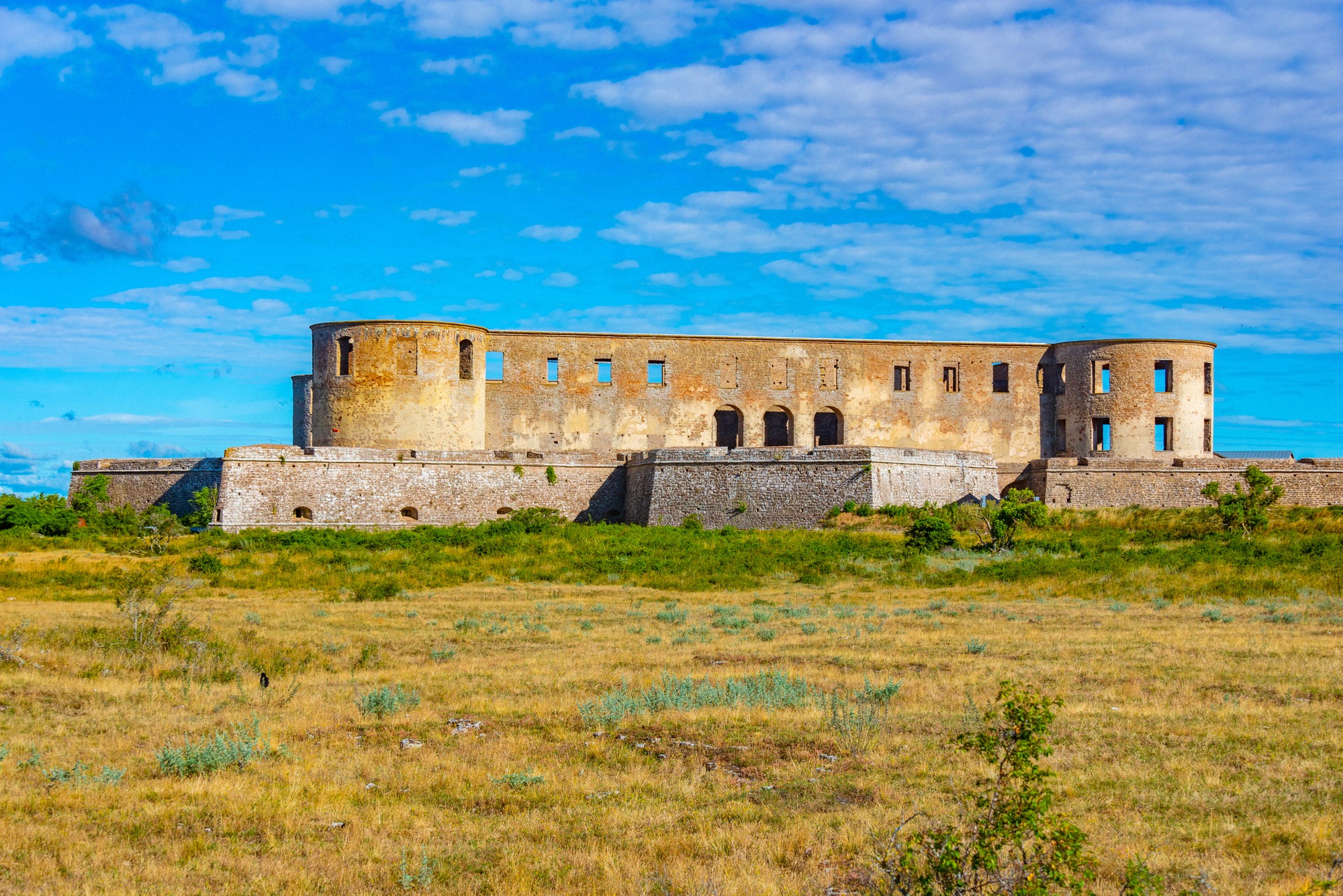
In the north stands the island's landmark: the mighty castle ruin Borgholm Castle, easy to combine with the royal summer residence Solliden Palace. Along the west coast are the photogenic limestone sea stacks of Byrums Raukar, and further north the forest Trollskogen and the long sandy beach Böda Sand, next to the family-friendly beach Lyckesand.
In the middle of the island, the bare limestone steppe Stora Alvaret, a UNESCO World Heritage site you're free to walk across, shapes the landscape. This is also where you'll find the windmill row Lerkaka Väderkvarnar, the open-air museum Ölands Museum Himmelsberga, the glass-art museum Vida Museum, and the family-friendly Ölands Djurpark.
In the south are the reconstructed ring fort Eketorp, the Iron Age Gettlinge burial ground, and the harbour village Grönhögen. The southern tip itself is a single unit: the bird reserve Ottenby with its Naturum visitor centre, and Sweden's tallest lighthouse Långe Jan. Its counterpart at the northern tip is the lighthouse Långe Erik.
Free or with admission
Many of the finest places on Öland cost nothing to visit. Byrums Raukar, Stora Alvaret, Trollskogen, the Gettlinge burial ground and Lerkaka Väderkvarnar are open and free year-round, as are the beaches Böda Sand, Grönhögen and Lyckesand. It's worth knowing the difference between the site itself and its car park or climb: at the Lyckesand beach car park, parking costs around 10 SEK per hour during peak season (15 June to 15 August), and is free the rest of the year. At Långe Erik and Ottenby, the causeway, the walk and the Naturum are free, you only pay to climb the tower or join a guided tour.
The major attractions are more conventionally paid: Borgholm Castle (140-150 SEK depending on season), Solliden Palace (150 SEK), Eketorp (75 SEK in spring, 150 SEK in summer, 125 SEK from 17 August), Himmelsberga (120 SEK, half price in April and October), the Vida Museum (140 SEK) and Ölands Djurpark (495 SEK per person in peak season, 195 SEK for the animal park only in the off-season, plus a 60 SEK daily parking fee in each case). Climbing Långe Jan costs 50 SEK for adults and 30 SEK for children; the Naturum at Ottenby is free. Sources put the fee for the Långe Erik tower at around 30 SEK, which isn't officially confirmed for 2026, check locally before you go. Current prices and opening hours are listed on each destination's own page.
Routes and the best time to visit
For a first visit, the route plan Öland in 3 Days is a good starting point: three stages from north to south taking in castles, World Heritage landscape, beaches and lighthouses. A week makes for a more relaxed trip, leaving room for beach days and cycling. The island also groups well by theme: families head for Ölands Djurpark, Böda Sand and Eketorp; birdwatchers go to Ottenby, which also runs guided bird-ringing tours from 500 SEK per small group, and the lighthouses Långe Jan and Långe Erik; and those interested in culture and art head for the Vida Museum, Himmelsberga and the castles.
Most of the paid attractions run seasonally: Eketorp is open from May to the end of August, the animal park's peak season runs from mid-June to mid-August, Långe Jan from early April to the end of October, and the Långe Erik tower from early May to the end of September. The free nature reserves and the World Heritage site, by contrast, are worth visiting year-round, so if you prefer things quiet, travelling outside peak season still pays off. For swimming, high summer (June to August) is the safest bet; for the orchids flowering on Stora Alvaret, May and June are ideal; and for bird migration at Ottenby, spring and autumn, more in the guide Best Time to Visit.
Frequently asked questions
Which places on Öland are free to visit? +
The nature reserves and heritage sites are free and open year-round: the limestone sea stacks of Byrums Raukar, the UNESCO World Heritage steppe Stora Alvaret, Trollskogen at the northern tip, the Gettlinge burial ground and the Lerkaka windmill row. The beaches at Böda Sand, Grönhögen and Lyckesand are also free to enter, though the Lyckesand car park charges a fee of around 10 SEK per hour during peak season (15 June to 15 August); outside that window parking is free too.
What is the one place on Öland you shouldn't miss? +
The island's landmark is Borgholm Castle, the largest castle ruin in Scandinavia, in the north. For a well-rounded first visit, add the UNESCO World Heritage landscape Stora Alvaret in the middle of the island, the southern tip with Sweden's tallest lighthouse Långe Jan and the Ottenby bird reserve, and the long family beach Böda Sand, covering castle, World Heritage site, lighthouse and beach in a single trip.
How many sights does Öland have? +
This travel guide covers 17 selected destinations, from castles and a reconstructed ring fort to museums, an animal park, nature reserves, lighthouses and the island's three best beaches. The Ottenby bird reserve and the Långe Jan lighthouse together form the southern tip. All of the sights lie along the island's roughly 137-kilometre north-south axis.
What does admission to Öland's attractions cost? +
Borgholm Castle costs 140 to 150 SEK for adults depending on the season, and Solliden Palace 150 SEK. The Eketorp ring fort has three seasonal rates - 75 SEK in spring, 150 SEK in summer, and 125 SEK from 17 August in late summer. The Himmelsberga open-air museum charges 120 SEK (half price in April and October), and the Vida glass museum 140 SEK. Ölands Djurpark costs 495 SEK per person for the full package in peak season, plus a 60 SEK daily parking fee. Climbing Långe Jan costs 50 SEK for adults and 30 SEK for children. Many places take card payment only; check the relevant page for current prices and opening hours.
How many days do you need for Öland? +
As a rule of thumb, three to four days are enough to cover the main sights in the north and south if driving the length of the island, see the suggested route in “Öland in 3 Days”. A week is more relaxed and leaves room for beach time and cycling. Summer is the best time to visit: the animal park, Eketorp, the lighthouse climbs and the museums mostly run seasonally from June to August.
Can you get to Öland without a car? +
Yes. The island itself has no railway, but the mainland station Kalmar Resecentrum is well connected, and bus line 105 crosses the toll-free Öland Bridge (Ölandsbron) to Färjestaden in around 22 minutes, roughly every 30 minutes. There is no ferry between Kalmar and Färjestaden; in summer, a small car ferry also links Oskarshamn with Byxelkrok at the northern tip.